学术报告 | Stochastic corrosion modeling and integrity assessment of pipeline systems
发表于: 2026-06-01上海防灾救灾研究所学术报告
报告主题(TOPIC)
Stochastic corrosion modeling and integrity assessment of pipeline systems
报告人(SPEAKER)
Prof Dr. Hui Wang (王慧), Associate Professor with Tenure at the University of Dayton, School of Engineering.
报告时间(TIME)
2026年6月3日(周三) 下午2:00-3:30
报告地点(VENUE)
同济大学衷和楼802
主持人(CHAIR)
彭勇波 教授
报告内容(Abstract)
Corrosion remains one of the primary threats to the safety and reliability of aging pipeline infrastructure. Effective integrity management requires not only understanding corrosion mechanisms but also quantifying the uncertainties associated with corrosion growth, inspection measurements, environmental conditions, and material properties. Traditional deterministic approaches often struggle to capture these uncertainties, leading to conservative or unreliable decision-making.
This presentation highlights recent research conducted aimed at advancing risk-informed and uncertainty-aware pipeline integrity management. The talk will introduce stochastic corrosion growth models that integrate physics-based understanding, probabilistic methods, and inspection data to characterize corrosion evolution and predict future pipeline conditions. It will also discuss the development of dynamic pipeline risk databases that combine in-line inspection, cathodic protection, environmental, and operational data to support comprehensive integrity assessments.
Examples from ongoing research will demonstrate how Bayesian learning, uncertainty quantification, and risk-based decision frameworks can improve remaining-life prediction, inspection planning, and maintenance prioritization. The presentation concludes with a discussion of emerging opportunities in artificial intelligence, digital twins, and data-driven infrastructure management for enhancing the safety, resilience, and sustainability of pipeline systems.
报告人简介(Speaker Bio)
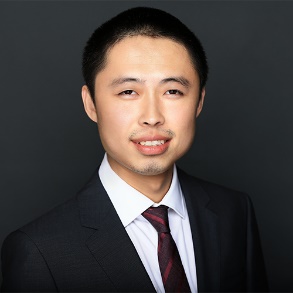
Dr. Hui (Jack) Wang joined the University of Dayton in 2018 with the Department of Civil and Environmental Engineering. He obtained his BS and MS degrees in civil engineering from Tongji University and received his Ph.D. degree at the University of Akron in geotechnical engineering. Before his faculty appointment, Dr. Wang has three years of research experience in machine learning and computational geosciences at the RWTH Aachen University in Germany. His research focuses on the opportunities in the multidisciplinary fields spanning machine learning, corrosion engineering, geotechnical/geological subsurface modeling, smart infrastructure, and reliability risk assessment. Many of his publications cover technical and practical issues regarding pipeline external corrosion assessment. Dr. Wang has also made significant strides in managing underground pipeline corrosion risk through the development of machine learning algorithms and platforms. His work in this area has been widely adopted by industry and integrated into operational practices, receiving ongoing support from the US Department of Transportation's Pipeline and Hazardous Materials Safety Administration (PHMSA) and major industry players such as Rosen and Saudi Aramco. He is a member of ISSMGE TC304 (Engineering Practice of Risk Assessment and Management), and ASCE\Geo-Institute Technical committee: Risk Assessment and Management. He is a reviewer for all major international journals of geotechnical engineering, civil and infrastructure engineering, and engineering geology. He is also on the editorial board of the Journal of Pipeline Science and Engineering, Georisk, and Geodata AI. He is invited as one of the ISSMGE Bright Spark Lecturers.
欢迎感兴趣的师生参加
All interested are welcome